They say a rolling stone gathers no moss. But who are they? And what do they know about moss and stones? Bob Dylan knew something. But that was just based on what Erasmus wrote:
Musco lapis volutus haud obvolvitur.
– Erasmus of Rotterdam
And the meaning that “Moss cannot grow on a moving stone” is yet an adaptation of this proverb written centuries earlier:
Lapis qui volvitur algam non generat.
– Publilius Syrus
With this similar statement, the former Syrian slave was trying to say something significant here. Syrus was referring to nomads – those people always on the move who don’t put down permanent roots. He suggested they live this way to maintain freedom and independence. I sure did.
Erasmus believed that being as unmoving as a stone is synonymous with stagnation. For Publilius, his seaweed suggested the freedom of rolling on be regarded as a virtue. And that virtue is one I hold true, even if our stone is no longer as nomadic as it once was.
Yes, we bought a house. We sold our trailer. But I refuse to call it settling down. We were already pretty settled into that nomadic lifestyle. And, our world is currently rocking more than it has in years. And lately, this all got me thinking…
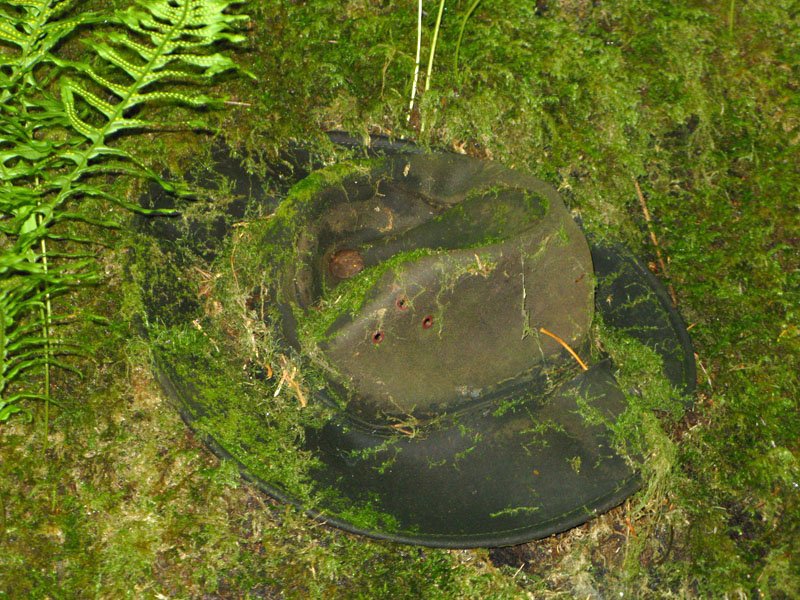
Does the stone that is rolling gather no moss?
But wait. Consider this: One simple switch of a single word gives us this sentence:
The stone that is rolling does gather no moss.
Noam Chomsky fans may get where I’m going here. It might merely be a matter of linguistics, but it’s amazing how a simple change can make such a big difference. Confused? Want to learn more? Watch the documentary:
This fascinating film explores theories Noam Chomsky has on the emergence of language and modern linguistics. Through animations and interviews, the conversations convey complex cognitive ideas with playful, personal discussions. Like how we take it to be obvious that when we let go of a ball, it goes down and not up. Or how the rolling of a stone might affect its gathering of moss. Or not.
The World is a very puzzling place.
If you’re not willing to be puzzled, you just become a replica of someone else’s mind.
– Noam Chomsky
But I digress. And enough about stones. Let’s talk about the moss.

Dylan doesn’t even mention moss when he asks you: How does it feel?
To be on your own, with no direction home
A complete unknown, like a rolling stone
– Bob Dylan
Is the moss really all that bad?
Perhaps a little moss is a good thing. Again, maybe it’s a matter of linguistics. But I think the Japanese know better. They believe the moss is both important and meaningful in their own version of, “A rolling stone gathers no moss”.
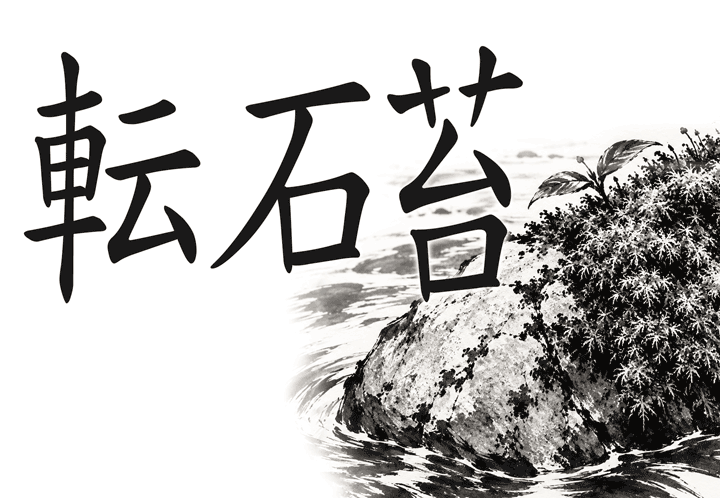
Tenseki Koke Musagu
The Japanese language is intentionally ambiguous. It allows them the freedom to be flexible when defining meaning, depending on the circumstances. Again, back to freedom. “Tenseki Koke Musagu” actually infers the interpretations of both Erasmus and Publilius Syrus. And everything depends on how you view the moss.
By standing still, the bad moss may start to grow on you. So it is time to get that stone rolling again. However, if you are forever rolling you never allow any beautiful moss to grow on you. You must take a break, and give it time.
For the Japanese, the moss is significant enough to include the word “koke” in their national anthem.
Kimigayo wa
Chiyo ni yachiyo ni
Sazare-ishi no
Iwao no narite
Koke no musu made
May your kingdom
May your reign continue for a thousand, eight thousand generations,
Until tiny pebbles
Grow into mighty boulders,
Covered in moss.
I say, let that beautiful moss continue to grow. Maybe you’ll even get some bright lichen start to spread. Given enough time, that may break your boulders back down to pebbles. And perhaps those little stones may start rolling again.

So, Moss or No Moss?
How do we know if it is better to stand still or keep on rolling? We will never know until we experience both. That’s hard to do at the same time. But we tried just that each the 7,014 days we were on the road. The important thing is to never feel trapped.
Many of those dreaming of a more nomadic way feel trapped in the default life. After 19 years, 2 months and 13 days in one RV or another, we were starting to feel trapped in the full-time lifestyle. Now, with our comfortable house and Project M we have the best of both worlds. Having spent the last couple decades living in a box with no roots anywhere, we’re excited to discover everything our home and community have to offer us. And, yes you’ll still hear about any true camping adventures the future may bring.
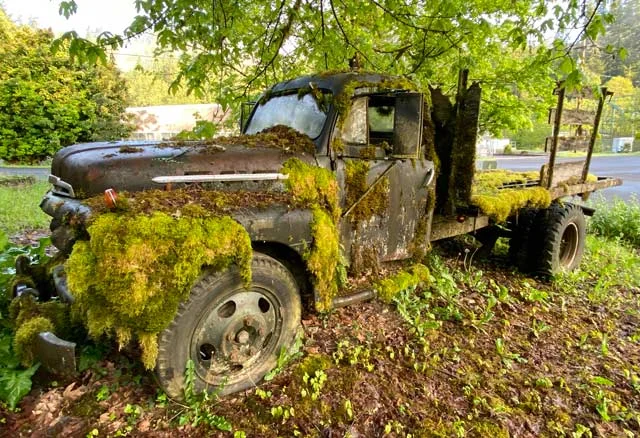
Epilogue
Inspiration for this rant came from reading Ganbatte! – The Japanese Art of Always Moving Forward.
Ganbatte (gan-ba-tay) is the Japanese philosophy focused on doing the best you can with what you have.
If, after a while, you feel it’s time to move on, remember the beauty of the moss that has grown on you.
Move ahead, but keep the moss.
– Albert Liebermann